
Album Review: 'One Assassination Under God: Chapter 2' by Marilyn Manson
The latest from the shock-rock icon concludes a triumphant redemption story and evokes even more curiosity about what may come next

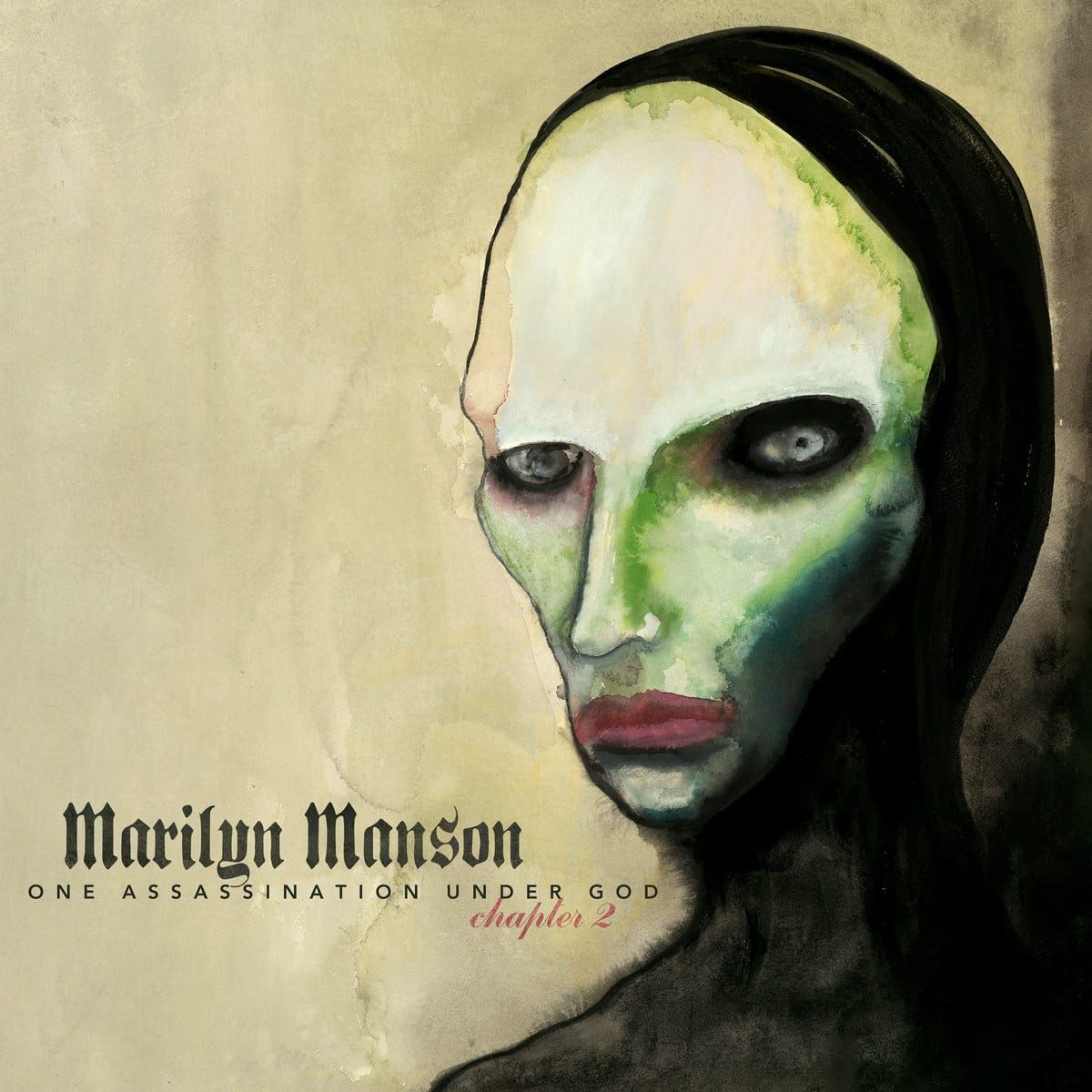
Marilyn Manson's musical resurrection story continues with the release of One Assassination Under God — Chapter 2, coming two years after 2024's initial installment. The first chapter of One Assassination Under God was Manson's first studio release since 2020's WE ARE CHAOS, and also served as his response to the coordinated effort to socially cancel him and end his career with a litany of allegations in 2021 that were later proven to have no merit. After a years-long investigation that produced no tangible evidence or results to support the claims made against him, the Los Angeles County Sheriff's Department and District Attorney Nathan Hochman made the decision at the beginning of 2025 to not press any charges due to the allegations falling outside of the statute of limitations, along with citing "credibility issues" in regard to the accusers.
At the end of the day, these cancellation attempts have not slowed Manson down anymore, and if anything, the situation seems to have reignited his creative focus and commitment to performing. Since his return in 2024, he has made several main stage appearances at metal festivals, successfully completed several sold-out tours in America and Europe, and by all accounts is looking and sounding better than he has in over 20 years. Additionally, sobriety has played a large part in his success on stage and in the studio during this new chapter of his career — Manson began his sobriety journey in early 2021, and it has clearly worked wonders for his creative focus, vocal control, and overall energy.
One Assassination Under God — Chapter 1 was met with overwhelming positivity after its release in November 2024 — musically, it featured some of his most compelling material in quite some time, and lyrically tackled topics like hive-mind and flock mentality social cultures, as well as introspective themes related to Manson himself, from processing the loss of his parents, to his path to sobriety, to his reclamation of his career after outside parties tried to steal it from him. The official buildup to Chapter 2 began just a couple months ago, with the release of the lead single "Exit Wound" on June 12 — Manson announced the album on the same day as the single, saying in an Instagram post, "I am proud to give you the second chapter of One Assassination Under God. This completes my story. I used each stone that was thrown at me to sharpen my edges. I outgrew purgatory and carved these songs into the skin of the world. As you listen I hope it forms a scar that you cannot forget." The following single, "Front Toward Enemy," released on July 21, was previously featured as a B-side on the physical release of the Chapter 1 single "Raise the Red Flag," and is musically one of Manson's heaviest songs since Born Villain's "Murderers Are Getting Prettier Every Day." These were the only singles released before the full album, perfectly building the anticipation for what the rest of the album would entail.
Musically, Chapter 2 is structured very similarly to Chapter 1, in the sense that the tracklisting creates a similar sonic atmosphere. Chapter 2's opening track, "Unalive," serves as a comparable brooding and tense opening that could be felt from Chapter 1's title track. The following track, "Don't Answer the Door," musically eases into the rest of the record, while the third track, "Front Toward Enemy," is off to the races, which is also similar to Chapter 1's duo "No Funeral Without Applause" and "Nod If You Understand." "Exit Wound" is a heavier song that makes an appearance later in the album much like "Raise the Red Flag," and "Enantiomorph" closes the album in a way that's both lyrically tragic and musically beautful in the same way that "Sacrifice of the Mass" ended Chapter 1.
Lyrically speaking, Chapter 2 seems to speak a little more directly about the cancellation attempt that Manson was subject to in 2021, from his own emotions in the moment to his path to regaining control over his career. There's a huge theme of vengeance and justice throughout this album, with songs like "Front Toward Enemy" and "The Arsonist" highlighting those sentiments. In Manson's live shows, Manson would make a point to say that these attempts to destroy him only made him stronger, and that sense of contentment is perfectly articulated in "All the Vilest Things."
Sonically, it's nice to have the same production team cover both Chapter 1 and Chapter 2, so that there's a more consistent tone and it makes for a more cohesive feeling shared between both albums. They were both recorded at the same studios, had the same production personnel for responsibilities like mixing, mastering, etc., and the end result is an impressive collection of music to kick off this new era of Manson's career.
For the rest of the band, it's the same delegation as that of Chapter 1, with Tyler Bates covering guitars, keyboards, and orchestration, and Gil Sharone on drums. Both of them deserve a ton of credit for how both of these albums turned out, because it truly wouldn't have been the same without them. With Bates being a full-time film and television composer, along with a collaborator of Manson's for over a decade now, he knows exactly how to work with Manson and how to elevate his creative ideas into something more cinematic and sonically well-rounded. Sharone has also been in Manson's band for a long time, and his sense of rhythm and how to make a song feel is unmatched. In my review of Chapter One, I couldn't say enough how much I loved his work on the "Raise the Red Flag" single, and his work on this record is just as exceptional. Depending on what the song demands, he knows how to either give more of a driving sense of aggression or sit back and let the song breathe. Both Bates and Sharone have worked on the same Manson albums (2015's The Pale Emperor, Heaven Upside Down in 2017, and both One Assassination Under God chapters), and the One Assassination Under God duology is undoubtedly their best work with him to date.
While the sequencing may be similar to Chapter 1, Chapter 2 still has its own sonic identity and a very specific atmosphere that's unique to itself. Chapter 1 put some of Manson's inspiration from goth and post-punk music on display with songs like "Meet Me in Purgatory" and "Death Is Not a Costume," but Chapter 2 dives even further into it, with "None of the Suns" being the greatest example of that. Other songs like "Don't Answer the Door," and "All the Vilest Things" sound unlike anything that Manson has ever written, while still making total sense in the sonic context of this album.
Manson's eye for visual art has also been a wonderful aspect to these latest album cycles. He made the album art for both chapters, and even made companion pieces to accompany each song. As his comeback was starting to unfold, a painting that was cited as an influence on several different occasions was The Fallen Angel from French artist Alexandre Cabanel, and it was great to hear that influence take shape in the form of the song "Lucifer's Teardrop." This track also seems to be the very heart of these two albums, with lyrical themes of how being cast out can serve as a catalyst for some kind of reinvention. The follow-up track, "The Arsonist," feels like the album's climax point, with the music creating a stand-off type of atmosphere, and Manson lyrically reclaiming his place on top despite the lies his detractors try to tell.
The great thing about Manson's lyricism is the fact that it can be interpreted multiple ways, and that's on full display with the closing track, "Enantiomorph." The lyrics themselves are pretty straightforward, but the audience or intended recipient of them could be up in the air, depending on the listener's interpretation. While it's just about certain that this song was written for his wife, Lindsay Usich, arguments have been made that it could also somehow be directed towards his fanbase, or my personal favorite theory, Marilyn Manson speaking to himself, like he did on WE ARE CHAOS's closing track "BROKEN NEEDLE." The word "enantiomorph" refers to crystals that are mirror images of each other, so one could infer that this song is meant to be the Marilyn Manson character/persona speaking with the real man behind it all, Brian Warner. Again, it's very clearly a song dedicated to his wife, but many interpretations seem to be applicable for different listeners, and personally, when I listen to it, the persona vs. man perspective is a very compelling way to interpret it.
Despite the unique sound of this record, Chapter 2 still has enough familiarity to make it feel like a genuine Marilyn Manson album, and contains plenty of sonic callbacks to past work, whether they're intentional or coincidental. "Front Toward Enemy" has reasonably been compared to "Little Horn" from his 1996 magnum opus Antichrist Superstar from just about every fan that's heard it, "Exit Wound" has a kind of groove to it that's reminiscent of songs like "Organ Grinder" from his 1994 debut album Portrait of an American Family, and "The Arsonist" even features a section that hardcore fans may rhythmically recognize from his song "Apple of Sodom" from the David Lynch film Lost Highway (1997). Much like the Chapter 1 album cycle, there are also plenty of visual callbacks to past eras of Manson's career in the album's music videos, most notably in the latest video for "Unalive," which may now be tied with the video for "As Sick as the Secrets Within" as my personal favorite video Manson's ever made.
Manson is also no stranger to lyrical repetition, and this new album seems to use it as a tool to really drive certain points home. There are several instances in which certain lines are repeated several times in a song, and it feels like it emphasizes the importance of the point he's trying to get across with his lyrics. Some standout moments of this include "I'm the only enemy you'll ever need, my eyes may cry but I'll never weep" in "Unalive," "I've got Heaven on my mind, I've got Hell in my heart" in "All the Vilest Things," and "the ones who hate you always find each other" in "The Arsonist."
Overall, this chapter seems to fully tell the story of Manson biding his time and slowly rebuilding behind the scenes while this situation was happening, with him fully envisioning the end result of him coming out of this situation stronger than his detractors. What's even more impressive is that things played out in real life exactly as this album laid it out — the writing of this album was finished in 2023, long before there was any sort of official announcement of any tour dates or new music. Once things started moving, however, fans were amazed at Manson's live shows and how much his voice had improved, the new music impressed both fans and critics, and more people saw the cracks in the foundation of those who tried to silence him in the first place.
It changes with each listen, but as of now, my top 3 standout tracks from One Assassination Under God — Chapter 2 are:
- Unalive
- Lucifer's Teardrop
- Enantiomorph
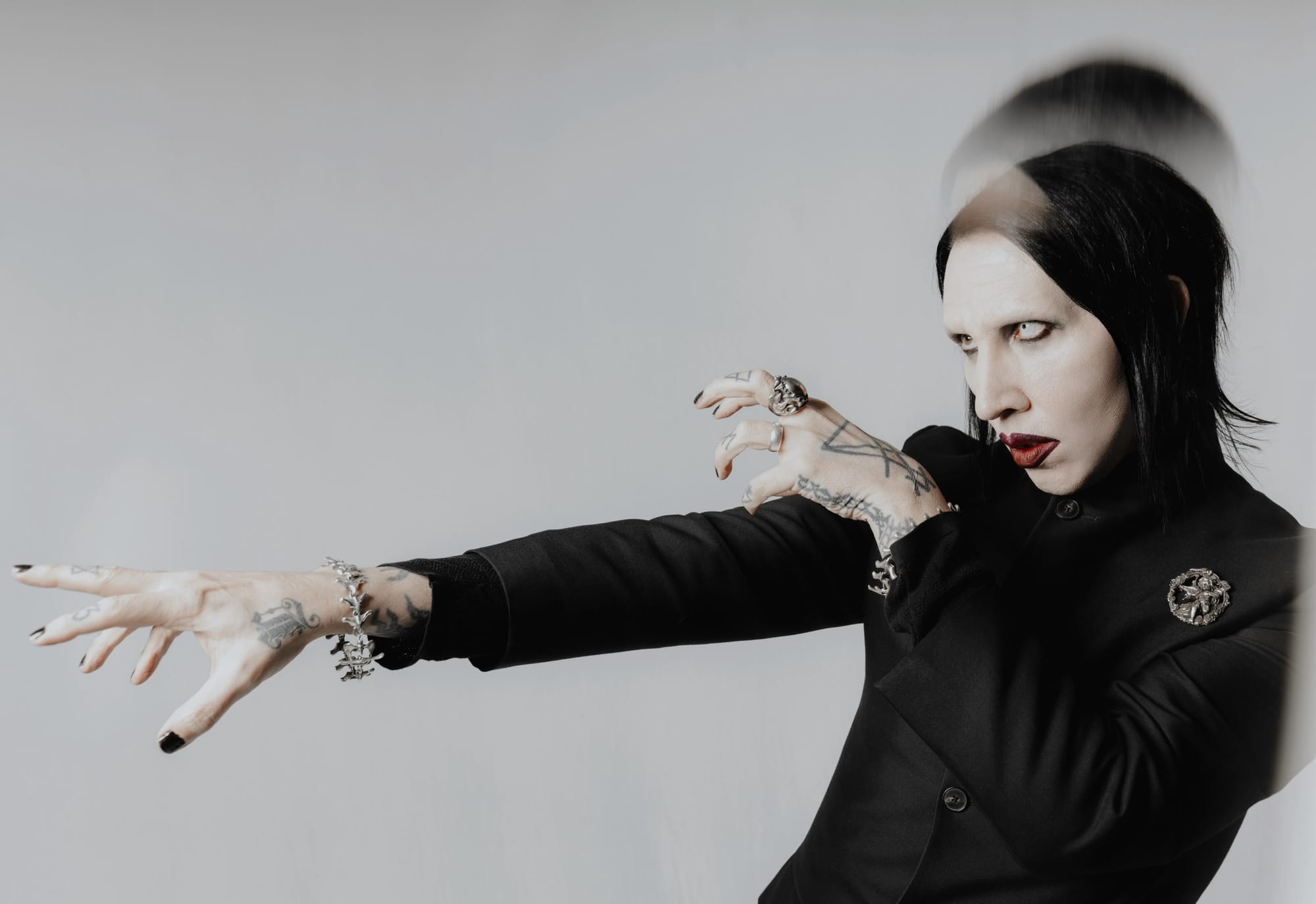
So now the question becomes, what's next? With his story of the past several years now told in its entirety, what does the next album look, sound, or feel like? He's currently in a fantastic position both creatively and physically, with sobriety seeming to give him a new lease on life, so it's going to be really interesting to see what he manages to create with the weight of the last several years now off of his back. Only time will tell, and I personally can't wait to see what the future holds for his next release.
Until then, Marilyn Manson is about to hit the road once again, this time co-headlining amphitheaters with fellow shock-rock legend Rob Zombie on the "Freaks on Parade" Tour in the US for the rest of the summer. He also has a few headline dates this fall in celebration of the 30th anniversary of Antichrist Superstar in a handful of cities across the US. For tour dates and to buy tickets, click here.
Manson has also recently launched an interactive website that features an online art gallery dedicated to the One Assassination Under God albums, commentaries on each song, a scavenger hunt that results in a little surprise pertaining to new music, and more. Manson hasn't done any interviews since 2020, so this was an awesome way to get to hear about his creative process for these albums. Click here for more information.
Buy/stream One Assassination Under God — Chapter 2 here.
To keep up with Marilyn Manson, click here.